Introduction
Someone who is depressed doesn’t always lay in bed all day or can’t work. A lot of individuals go to work, take care of their families, fulfill deadlines, and smile at parties, but they are secretly having a hard time. People typically call this high-functioning or functional depression.
It’s important to know the functional depression symptoms because they can be hard to see, even for the individual who is going through them. In this complete guide, we’ll talk about functional depression, including what it is, how it makes you feel and how it affects your body, what causes it, what makes it more likely to happen, and what you can do to treat it.
What Is Functional Depression?
Functional depression isn’t necessarily an official medical term, but it’s often used to describe people who have many of the signs of depression yet nonetheless manage to get things done every day.
Clinically, it frequently coincides with conditions such as persistent depressive disorder (dysthymia), as delineated in the Diagnostic and Statistical Manual of Mental Disorders and acknowledged by the American Psychiatric Association.
Functional depression may not fully disrupt job or family life, unlike severe depressive disorder; yet, it profoundly impacts emotional well-being.
Quick Question: What Are the Functional Depression Symptoms?
People who have functional depression symptoms show indicators of chronic depression even if they are able to keep up with their everyday responsibilities. These markers include sadness, weariness, poor motivation, and emotional numbness.
Why People Don’t Always Notice Functional Depression
People who have functional depression often:
-
Look like you’re doing well or taking care of things
-
Don’t talk about how you feel
-
Feel bad for not being “depressed enough”
-
Look at how their problems compare to others
Because they are still able to do things, their agony is lessened by themselves and others.
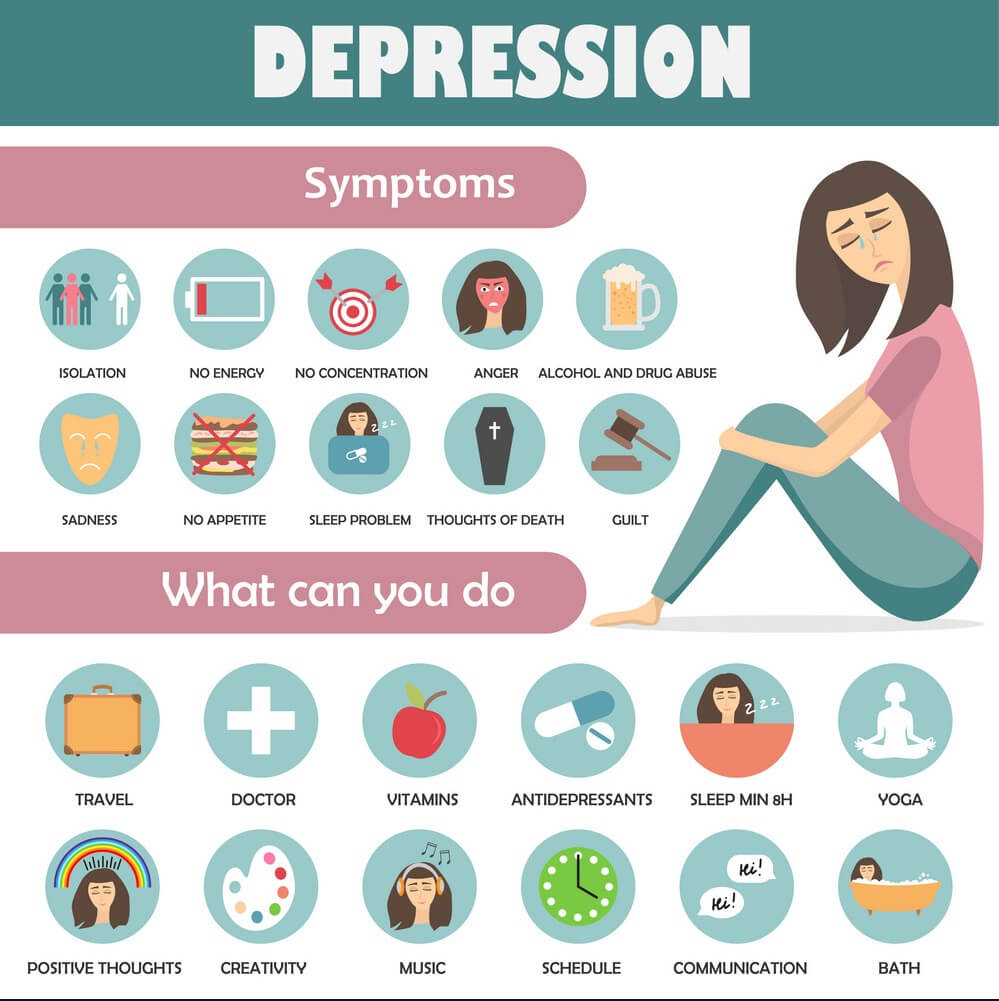
Common Functional Depression Symptoms
Recognizing the functional depression symptoms early will help keep you from getting hurt emotionally in the long run.
1. Always Feeling Down
A sensation of grief or emptiness that lasts for weeks or months.
2. Long-Term Fatigue
Energy levels stay low even after getting enough sleep.
3. Loss of Happiness
Things that used to be fun now feel like chores.
4. High Productivity but Emotional Burnout
Some people work too much to keep their minds off of their emotional agony.
5. Being Irritable
It’s easier to get upset over small things now than it used to be.
6. Trouble Focusing
Mental fog makes tasks take longer.
7. Changes in Sleep
Sleeping too much or not enough.
8. Changes in Appetite
Emotional eating or not being hungry.
These functional depression symptoms may seem slight on their own, but when combined, they have a big effect on quality of life.
Emotional Functional Depression Symptoms
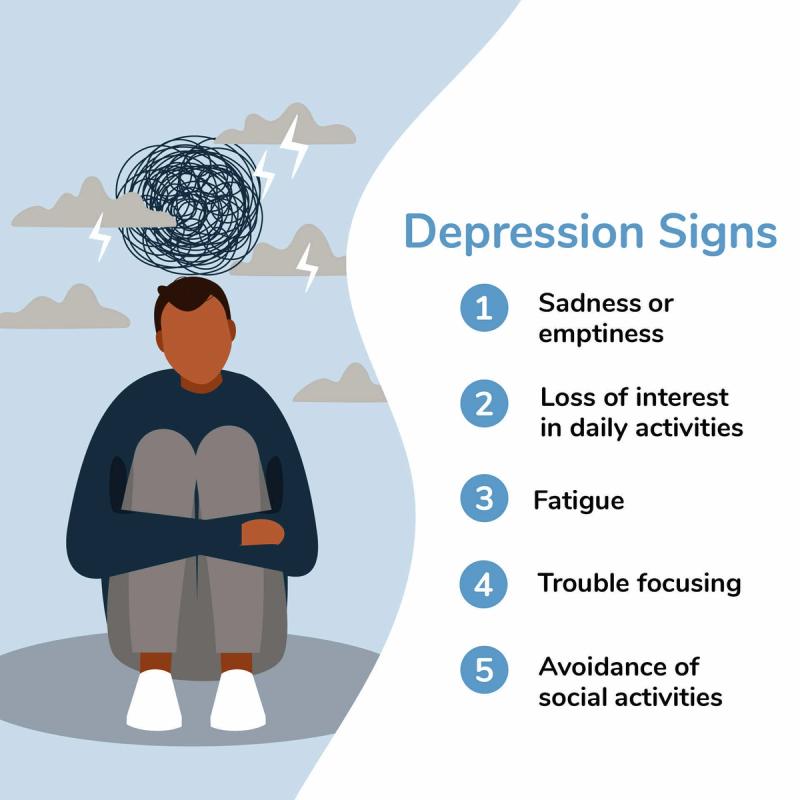
People generally don’t pay enough attention to emotional signs.
Sadness That Isn’t Obvious
Crying in private while smiling in public.
Not Feeling Anything Emotionally
Feeling cut off from happiness, enthusiasm, or even sadness.
Doubt About Yourself
Always feeling like you’re not good enough.
Feeling Bad
Feeling bad for having a “good life” but still having trouble.
These internal conflicts might endure quietly for years.
Signs of Functional Depression in the Body
Depression has an effect on both the mind and the body.
| Physical Symptom | How It Feels | Why It Happens |
|---|---|---|
| Headaches | Pain in the muscles often | Unbalanced stress hormones |
| Problems with digestion | Feeling bloated and sick | Disruption of the gut-brain link |
| Aches in the muscles | Soreness that doesn’t go away | Response to chronic stress |
| Weak Immune System | Getting colds a lot | Immune system that isn’t as strong |
| Problems with Sleep | Insomnia or too much sleep | Changes in circadian rhythm |
Many people who have these physical functional depression symptoms go to their general doctor without realizing that the true problem is emotional.
Signs of Behavior to Look For
Changes in behavior are small but important.
-
Not having deep conversations
-
Changing plans at the last minute
-
Too much work
-
More time on screens
-
Pulling away from social situations while looking “busy”
These actions make people feel more alone over time.
Causes and Things That Make It More Likely
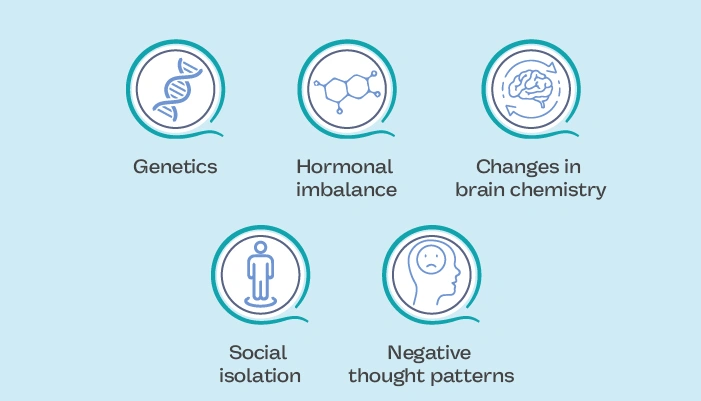
There is no one thing that causes functional depression. It usually happens slowly.
1. Stress That Lasts a Long Time
Long-term stress from job or family duties.
2. Wanting to Be Perfect
Having high internal expectations makes you more stressed out.
3. Genetic Factors
Having a family history of depression makes you more likely to get it.
4. Trauma
Emotional suffering that hasn’t been dealt with.
5. Comparing Yourself to Others
Seeing groomed lives on sites like Instagram all the time can make you feel worse about yourself.
Can You Be Successful and Still Feel Sad?

Yes. Many people with functional depression keep their jobs, relationships, and obligations while feeling sad, tired, and emotionally numb on the inside. Being successful doesn’t keep you from getting depressed.
Functional Depression vs. Major Depression
| Feature | Functional Depression | Major Depression |
|---|---|---|
| Work Performance | Often kept up | Often not working right |
| Levels of Energy | Not too high but manageable | Very low |
| Talking to Other People | Lessened yet still there | Often removed |
| Severity | From mild to moderate | Severe |
| Duration | Long-term | Might happen in episodes |
Even though the symptoms may seem less severe, functional depression that isn’t addressed might turn into major depression.
Functional Depression Symptoms in Various Demographics
Among Women
-
Being emotionally tired
-
Too much time spent on family and work
-
Sensitivity to hormones
For Men
-
Being irritable instead of sad
-
More drinking
-
Suppressing feelings
For Students
-
Pressure in school
-
Not getting enough sleep
-
Comparing yourself to others
In People Who Work
-
Ambition that looks like burnout
-
Hard time turning off work
Recognizing the functional depression symptoms in some populations helps to provide better support.
When to Get Professional Help
Get help if:
-
Symptoms continue longer than two weeks
-
Changes in sleep or appetite continue
-
Thoughts of hurting oneself come up
-
Daily tasks begin to feel too much to handle
Mental health experts utilize standardized parameters, such as those in the Diagnostic and Statistical Manual of Mental Disorders, to figure out how bad a person’s depression is.
Choices for Treatment
The severity of the condition determines the treatment.
1. Therapy
Cognitive Behavioral Therapy (CBT) works quite well. It helps you see patterns of negative thinking.
2. Medicine
When symptoms are mild to severe, doctors may give you antidepressants.
3. Changes in Lifestyle
-
Working out regularly
-
A diet that is balanced
-
Routine for sleep
-
Less drinking of alcohol
4. Mindfulness Exercises
Meditation and breathing exercises lower the levels of stress hormones.
Addressing functional depression symptoms early leads to better long-term results.
Useful Ways to Deal With Things
Make a Support Network
Have honest conversations with friends or relatives you trust.
Set Goals That Are Possible to Reach
Don’t put too much on your calendar.
Practice Showing Your Feelings
Writing in a journal might help you let go of feelings that have been building up.
Plan for Rest
Don’t think of rest as being lazy.
Limit Your Use of Social Media
Comparing things makes bad thoughts worse.
These regular habits are a good way to deal with the functional depression symptoms.
Helping Someone Who Has Functional Depression
If someone you care about seems “fine” but is emotionally distant:
-
Ask questions that don’t have a clear answer
-
Don’t downplay their feelings
-
Gently push for therapy
-
Give support all the time
Stay away from sentences like:
-
“You don’t seem sad.”
-
“Other people have it worse.”
Validation is a strong thing.
Long-Term Effects if Not Addressed
If you don’t address functional depression, it could lead to:
-
Major depressive disorder
-
Anxiety disorders
-
Using drugs and alcohol
-
Breakdown of the relationship
-
Decline in physical health
Recognizing the functional depression symptoms early on helps stop it from getting worse.
Questions That Are Often Asked
Are the functional depression symptoms the same as those of dysthymia?
There is a lot of overlap between them. Persistent depressive disorder (dysthymia) is a long-term poor mood that can look like functional depression.
How long do the functional depression symptoms last?
If not treated, they can linger for months or even years.
Do you constantly need to take medicine?
Not all the time. Therapy and changes to your lifestyle may help mild cases.
Can working out truly help?
Yeah. Exercise on a regular basis raises endorphins and helps you control your mood.
Conclusion
Functional depression is sometimes hard to see, but that doesn’t mean it’s not dangerous. Being able to go to work, smile at friends, and get things done every day doesn’t mean you’re not in emotional pain.
If you can spot the functional depression symptoms early, you can stop your mental health from getting worse. If you or someone you love is feeling unhappy, tired, or emotionally numb all the time yet still able to do things, it might be time to get help.
Mental health is just as important as physical health. You don’t have to wait until you’re “broken” to ask for help.
The first step to getting better is to admit that there is a problem.